



The real estate sector and the franchise model: a winning combination despite market transformation.
- Promoted by the Spanish Franchise Association (AEF), FIS2024, and with main sponsorship from BBVA, it lays the foundation for the development of the main meeting point for the franchise business ecosystem
- The event receives support from both central and regional government, with the presence of Marta Nieto, Director General of Commerce, Consumption and Services of the Community of Madrid, and Julián Conthe, Director General of Commercial Policy of the Ministry of Economy, Trade and Business of the Government of Spain
- It created a network of 1,600 entrepreneurs, investors and strategic allies
Madrid, 18 November 2025
The real estate sector in franchise model is undergoing a complete metamorphosis. Gone is the traditional neighborhood agency with a physical storefront and door-to-door lead generation. Today, the brands that dominate the market—and those aspiring to do so—face a dual challenge: understanding and adapting to an increasingly digitalized consumer and anticipating a complex economic context in which extremely high prices are constrained by very limited supply and diminishing purchasing power.
This transformation could be understood based on four major vectors of change: unbounded globalization, the invasion of digitalization, the imperative for sustainability and the need for diversification. And each of them responds to structural causes that we cannot, and must not, ignore.
The vectors of change: globalization, digitalization, sustainability and diversification
Let’s start by talking about globalization: an unstoppable phenomenon that ceased to be an aspiration long ago to become a tangible reality in all aspects of our lives, and the housing sector could be no exception.
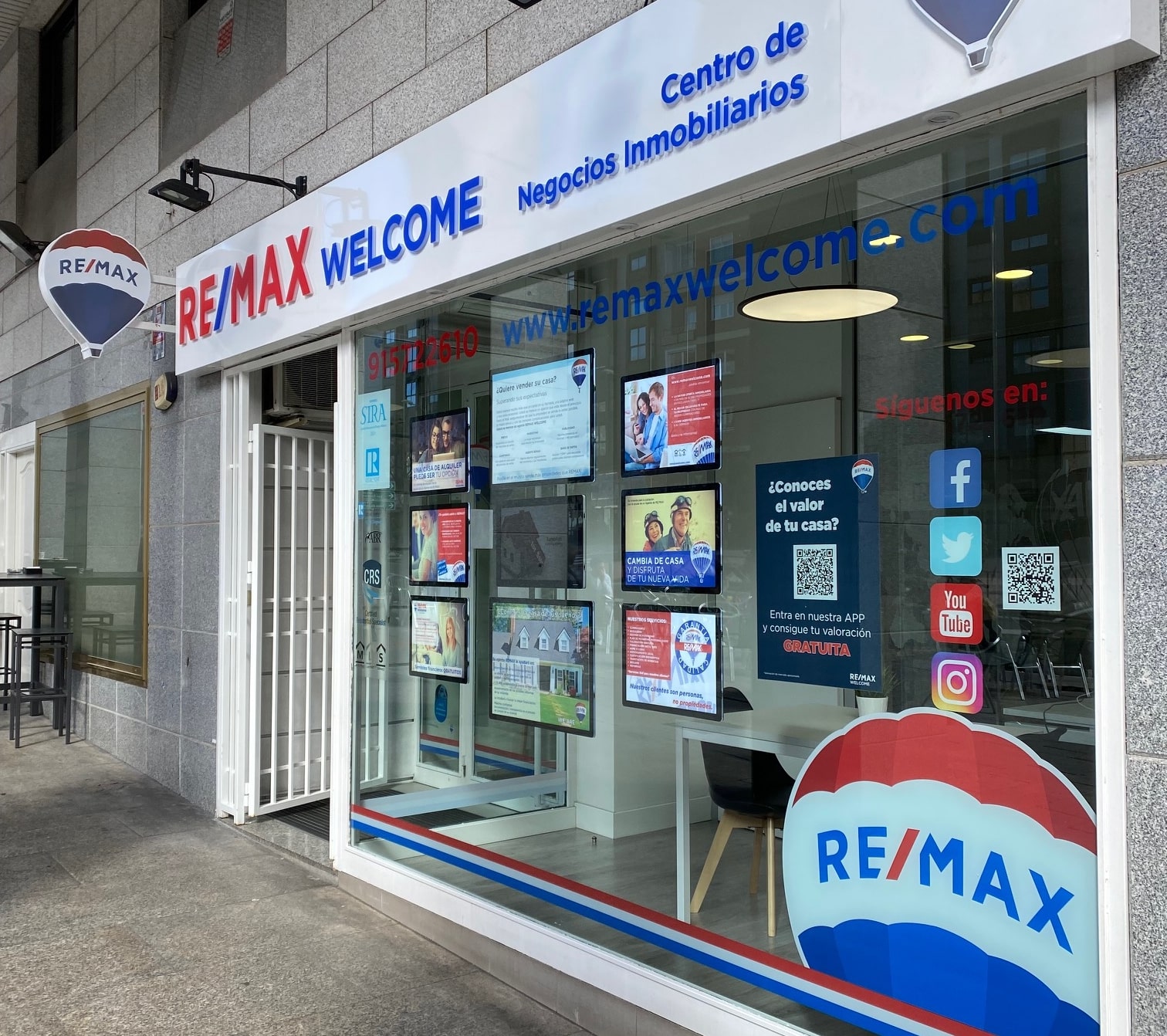
Real estate groups like RE/MAX or Engel & Völkers have managed to demonstrate that the franchise model can operate successfully in over a hundred countries, with decentralized structures and minimal adaptations. International property transactions—driven by tourism, foreign investment and professional mobility—already require agencies to speak the language of the “global client.”
Meanwhile, digitalization is advancing even faster, if anything, than globalization. Clients no longer travel to a real estate office, but rather enter a portal, an app or a CRM. What entertains them and, above all, what is practical and efficient for them is seeing a property in 3D, receiving personalized notifications and signing from their mobile device. And this is where the franchise model surely has a unique opportunity to continue growing: standardizing technological processes, investing in common platforms and accelerating digital adoption among its franchisees. It’s digitalize or die.
In the case of sustainability, it has ceased to be a reputational add-on to become a legal imperative and, more strikingly, a social expectation. Agencies that are able to understand the value (with capital V) of an energy-efficient home—not just as a product, but as a brand strategy—will connect with more conscious buyers and more demanding investors.
And finally, diversification of supply: from rentals or new construction, to tourist residential, co-living or logistics spaces. Those agencies that know how to identify niches, segment their offering and train their franchisees will survive, as this way they will achieve greater resilience to the cyclical and inevitable crises of the real estate market.
What does the future hold for us then? Most likely it will not be linear or uniform, but it will undoubtedly belong to those brands that embrace change as a lever for growth. And the franchise model—due to its structural agility, its capacity to scale innovation and its vocation as a network—is prepared to lead this new era.
What is at stake is no longer just market share. It is the future relevance of real estate as an intelligent service, sustainable and connected to new ways of inhabiting the world.
At Franchise Innovation Summit (FIS), aware of the importance of all sectors that drive the franchise model every day, we have launched, together with Capital Radio, a series of discussions in which to chat with leading brands and experts from different disciplines about the trends, challenges and opportunities that the future holds for us.
The first session, dedicated to the real estate sector in franchising, featured the participation of Raúl Calleja, FIS Director, Javier Sierra, President of REMAX Spain; Andrés Rybak, CEO of RBK Prime International Real Estate; and Tony Expósito, Director of Operations and Development at Keller Williams.
You can enjoy the full program HERE
Meanwhile, digitalization is advancing even faster, if anything, than globalization. Clients no longer travel to a real estate office, but rather enter a portal, an app or a CRM. What entertains them and, above all, what is practical and efficient for them is seeing a property in 3D, receiving personalized notifications and signing from their mobile device. And this is where the franchise model surely has a unique opportunity to continue growing: standardizing technological processes, investing in common platforms and accelerating digital adoption among its franchisees. It’s digitalize or die.
Official openings, synergies and networking
The opening featured the prominent presence of Marta Nieto, Director General of Commerce, Consumption and Services of the Community of Madrid, who highlighted “the opportunities of celebrating a sector meeting point in Madrid, an autonomous community that leads the national ranking in terms of number of franchise headquarters, open locations, billing levels and being the main destination for foreign investment with 75% of total investment.”
Nieto also did not want to miss the opportunity to invite all attendees to “participate and create value, through the program of talks and other activities of the Franchise Innovation Summit.” An event which she said she was sure would be the first of “many more in the future.”
The second day of the Franchise Innovation Summit was opened by Julián Conthe, Director General of Commercial Policy of the Ministry of Economy, Trade and Business of the Government of Spain. Conthe highlighted Spain’s leadership as a pioneering country in franchise expansion, thanking the AEF for their work in this endeavor, highlighting their contribution to national GDP, close to 2%. Undoubtedly, “a growth engine adapted to a global market,” as the ministry official stated.
The two days of the event featured the participation of 70 top speakers and around twenty CEOs and top executives of the franchise system in Spain, who addressed, without interruption, the present and future of this business model, exploring themes and trends, such as the integration of artificial intelligence in business management, cybersecurity, or the power of emotion, communication and marketing under the franchise model. Other capital issues for franchising were also analyzed, such as internationalization, sustainability or gender equality, with a specific panel on the role of women in the world of franchising.
Franchise Innovation Summit 2024 brought together almost a thousand professionals in its different spaces during the two days of the event, achieving visibility through media and social channels close to one and a half million impressions.
FIS 2024 also offered networking spaces, facilitating interaction between franchisors, franchisees and key suppliers. This edition also delved deeper into all these strategic areas for franchising, as well as in the strengthening of business relationships, with a view to expanding its reach among investors, entrepreneurs, franchises and franchisees from Europe and Iberoamerica.
Among the key achievements obtained in this inaugural edition are the creation of a solid brand with sector reputation, the validation of an innovative and participatory format, and the development of a professional community (FIS 365), which already integrates more than 1,600 entrepreneurs, investors and strategic allies.
Furthermore, the connection between the main actors in franchising has been promoted, facilitating connections between brands and partners, laying the groundwork for a roadmap that positions FIS as a strategic commercial instrument at the service of the entire value chain of the franchise ecosystem.
FIS 2024 Ambassador Recognition Awards
Upon concluding the first day of the Franchise Innovation Summit, the FIS 2024 Ambassador Recognition Awards were presented, awards that sought to distinguish the work, commitment and impulse for the birth of FIS, in four categories: