Specialized retail strengthens its weight in the franchise ecosystem in Spain
Madrid, July 3, 2025
Retail sector franchises are consolidating their prominence in the Spanish market, with special dynamism in specialty stores, one of the formats with the greatest capacity for adaptation, innovation and growth within the franchise system.
With more than 1,380 active networks, 78,000 establishments and more than 318,000 jobs generated, the franchise model continues to grow in Spain and now represents close to 1.9% of GDP, according to data from the latest report from the Spanish Franchise Association (AEF).
In this context, specialty stores, including sectors such as fashion, electronics, home, beauty or gourmet food, have positioned themselves as one of the typologies with the greatest added value and projection in the retail channel. Their ability to differentiate, scale their value proposition and generate personalized experiences makes them one of the growth engines under the franchise model.
It is therefore not surprising that this segment already has more than 400 franchising brands and exceeds 40,000 operational establishments, contributing significantly to the sector’s business volume.
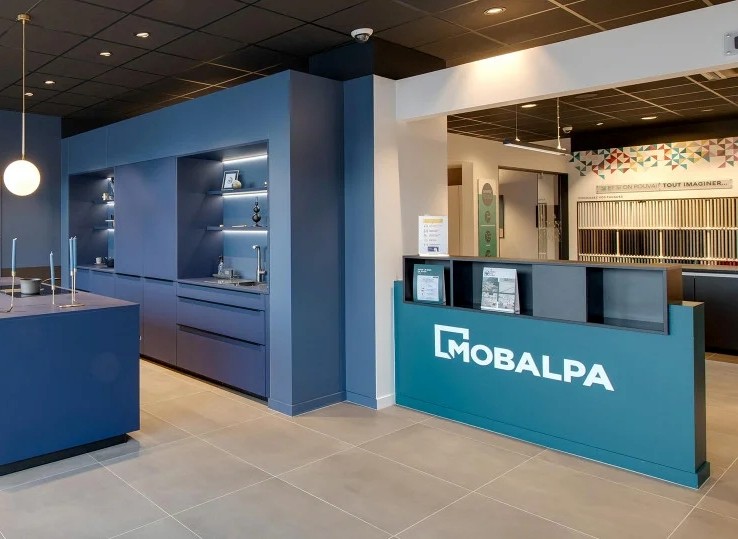
The specialized retail franchise model is consolidating as one of the most dynamic and resilient within the Spanish and European commercial system, offering real opportunities for growth and diversification for entrepreneurs, business owners and investors. Brands like Mobalpa and SoCoo’c (France), specialized in kitchen and home furniture, have shown that models oriented toward product personalization and customer experience can scale successfully in different markets, thanks to the solidity of their processes, brand identity and a clear value proposition. Hyper-specialization —as also illustrated by Tea Shop in the gourmet universe— allows franchisees to position themselves as references in a specific segment, with higher margins, greater loyalty and a more controlled operating environment. These brands not only offer a proven model, but also a clear roadmap for those who wish to invest in profitable, differentiated businesses with a vocation for permanence.
For the investor or entrepreneur, the appeal of specialized retail lies in its ability to adapt, both to the local market and to new consumption trends. Franchises like DepilConcept (Portugal) in advanced aesthetics, or REPLUS in enclosure solutions, demonstrate how business concepts that address specific needs with a high technical component offer solid trajectories in the medium and long term. Additionally, businesses like uStore-it, focused on storage space rental, are taking advantage of changes in urban lifestyles, positioning themselves as functional proximity solutions, highly demanded in metropolitan environments. Added to all this is the boost from brands focused on new consumption models such as Cash Converters (structured second-hand), Yakart Autocaravanas (mobility and leisure), or ECOX4D-5D-ELIXIAN (technology applied to emotional or aesthetic experience), which open opportunities in sectors with strong growth potential, even in more uncertain economic contexts.
From a business and strategic perspective, these franchises not only represent an investment with proven return, but also a channel to diversify portfolios, undertake without starting from scratch and benefit from consolidated know-how. Additionally, brands like The Body Shop and Yves Rocher, both oriented toward sustainability and ethical cosmetics, align their model with ESG values, attracting a more conscious consumer and franchisee profile. Ecosystem support initiatives like the Franchise Innovation Summit 2025 reinforce these opportunities, providing sector players access to knowledge, contact networks, emerging trends (such as AI, omnichannel or experiential design), and visibility before other investors and institutions. Brands like CARLIN (stationery and office) or AMBISEINT (olfactory marketing), with decades of trajectory, prove that even the most traditional sectors can reinvent themselves through specialization.
Value proposition and customer experience as growth levers
Faced with a more demanding and omnichannel consumer, specialized retail brands are betting on new expansion formulas (corners, hybrid locations, progressive digitalization), smart data-based loyalty, differential and immersive point-of-sale experiences and a strong brand identity consistent with their value proposition.
Today’s consumer seeks more specific experiences and solutions adapted to their needs. Hyper-specialization achieves greater emotional connection with the customer, in addition to better business scalability, the ability to offer a broader range of products and services, as well as a wider range of enhanced cross-selling options.
The key to hyper-specialization is based on having a customer profile as the epicenter of the business strategy, this way, the value proposition can be focused on their expectations and offer greater personalization. In exchange, the possibility of obtaining higher purchase tickets and greater loyalty resulting in greater recurrence.
This model attracts both investors and entrepreneurs and franchisees, and is gaining ground in shopping centers, prime streets and convenience environments. Additionally, many of these brands are betting on internationalization, contributing to positioning Spanish franchising beyond our borders.
In total, 311 national networks are present in 140 countries, adding up to 18,897 establishments outside our borders. Sectors such as fashion lead this internationalization —with 71 Spanish fashion chains adding up to 8,995 stores in 127 countries—, and nearby destinations like Portugal are consolidating as the main destination market (53.6% of internationalized Spanish franchises have presence there), followed by Mexico and Andorra. This expansion reflects the appeal of the Spanish franchise model abroad and its ability to adapt to different markets.
FIS 2025 reinforces its commitment to the retail channel
Brands that have bet on hyper-specialization are rewriting the rules of modern retail. In a continuously evolving environment, the challenges the future holds, such as the need for constant innovation and adaptation to changes in consumption habits (including retail commerce digitalization), will be key factors for specialized franchise stores to continue growing in a competitive environment. Facing these issues in a solid way, seeking new expansion opportunities and reinforcing resilience in the face of a changing global economic landscape, will be fundamental aspects to consider in order to continue growing.
Precisely to be a tool at the service of the franchise ecosystem, the 2025 edition of the Franchise Innovation Summit —which will be held on October 15 and 16 at the Riyadh Air Metropolitano Stadium in Madrid— will reinforce its program and showroom with content specifically directed at specialized retail.
Among the highlighted axes: multichannel expansion, real omnichannel, artificial intelligence in retail, space design, logistics innovation, talent acquisition and loyalty. The event will bring together more than 120 brands, 3,500 professionals and will feature the participation of leading franchisors, entrepreneurs, investors and franchisees from the national and international landscape.