The restaurant organized in franchise: the model that drives the present and future of hospitality in Spain
Madrid, June 18, 2025
In an increasingly competitive, volatile and digitalized economic environment, organized restaurant franchising has proven to be one of the most resilient, scalable models with the greatest growth capacity within the Spanish business ecosystem. From Franchise Innovation Summit (FIS), we observe with strategic perspective how this sector not only consolidates itself, but leads many of the transformations that today define the present and future of the HORECA channel.
Franchising and organized restaurant services: a natural alliance
Talking about organized restaurant services means talking about professionalization, operational efficiency, centralized management and replicability. By integrating the franchise model, a key element is added: scalability with shared investment, something that allows brands to grow agilely and entrepreneurs to access tested, profitable and supported business models.
According to the latest data from the Spanish Franchise Association (AEF) (2024 Report), 269 restaurant brands operate in franchise in Spain, generating more than 5,800 million euros in combined revenue and thousands of direct and indirect jobs. This represents a substantial part of the 27,623 million euros that the entire franchised system moves in our country.
A sector demonstrating maturity and traction
Organized restaurant franchising has not only recovered pre-COVID levels, but has strengthened its economic prominence. In 2023:
- More than 78,200 franchised establishments were exceeded, of which 57,000 were managed by independent franchisees.
- More than 318,000 jobs were generated, an increase of 4.8% compared to the previous year.
- The model demonstrated legal solidity and trust, with extremely low litigation rates (0.09% of cases between franchisors and franchisees).
This reality demonstrates a mature relationship between brand and operator and a growing professionalization of all actors in the system.
Brands leading the expansion
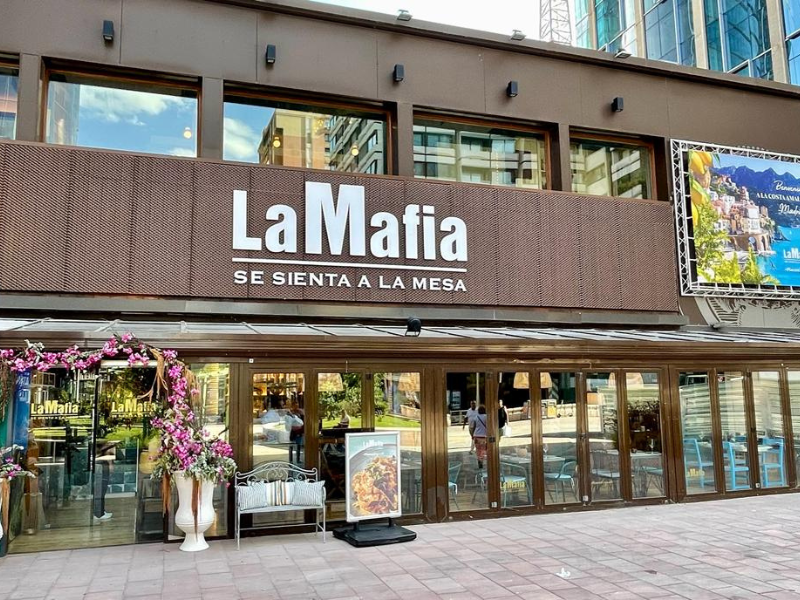
Chains such as Telepizza, Rodilla, 100 Montaditos, The Good Burger, La Famiglia, Goiko, Popeyes, KFC, Five Guys, La Tagliatella, Taco Bell or ALSEA are just some examples of brands betting on the franchise model as the axis of their growth. Whether through multi-unit formats, master franchise or independent units, these brands have managed to develop solid systems that attract both institutional investors and individual entrepreneurs.
Additionally, many of them are accelerating their international expansion, especially toward Latin America and Eastern Europe, positioning Spain as an exporter of organized and competitive restaurant concepts.
Current challenges: scaling efficiently
Although the model is solid, it is not without challenges. From FIS we identify several key vectors to work on:
- Rising costs (energy, raw materials, staff) continue to strain margins, especially in an inflationary environment.
- The shortage of qualified staff, both operational and in management positions, becomes a bottleneck for expansion.
- Competitive pressure forces brands to differentiate beyond price, betting on experience, sustainability and innovation.
- Digitalization is no longer optional: automation, proprietary apps, AI in shift and order management, or virtual kitchens are already standards among the most competitive chains.
Clear opportunities: franchise + innovation = growth
From FIS we are convinced that the combination of franchising and innovation represents one of the greatest opportunities of the moment. Brands with tested models, but open to technological evolution, are the ones capturing the most investor interest.
The growth of delivery, the rise of new formats (dark kitchens, grab & go locations, food halls), the professionalization of the franchisee as an “investor manager,” and international projection, are trends already marking the sector’s roadmap.
Additionally, the Spanish regulatory and legal framework provides security to investors: with practically nonexistent litigation, Spain is consolidating itself as a safe and attractive environment for developing franchise brands.
The role of FIS: an essential meeting point
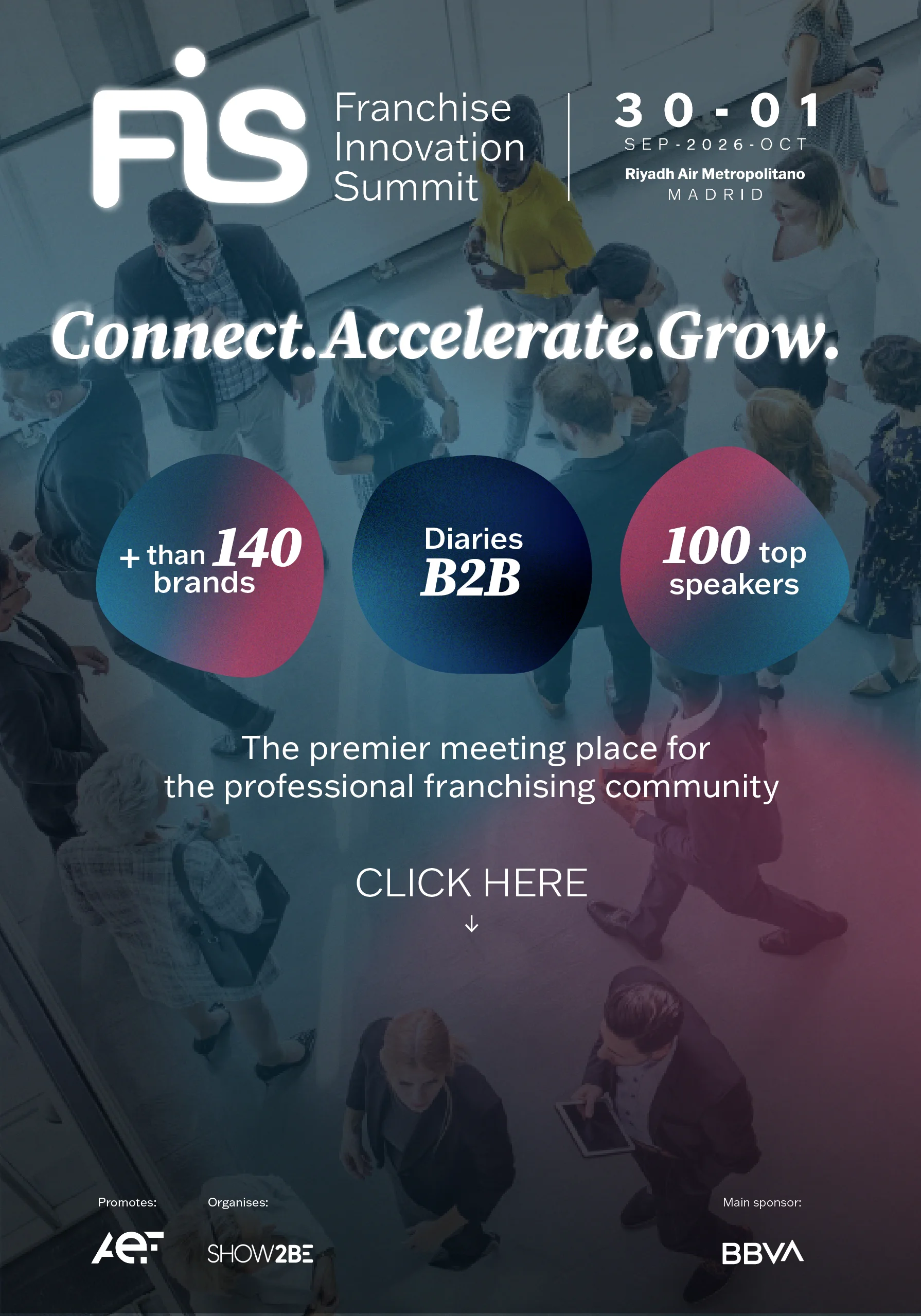
In this context, the Franchise Innovation Summit positions itself as the benchmark professional forum to connect franchisors, future franchisees, investment funds, specialized consulting firms and organized restaurant groups.
In each edition of FIS:
- Strategic business contacts are generated between actors seeking to grow in an orderly and professional way.
- Success stories and emerging models that inspire new initiatives are presented.
- The trends that will shape the future are discussed: AI, sustainability, internationalization, new formats, customer experience.
- The creation of lasting alliances is favored in a real and effective networking environment.
FIS is not just an event. It is a platform, an ecosystem and a meeting point for anyone who wants to grow an organized restaurant brand through franchising, with vision and ambition.
Conclusion: an opportunity that doesn’t stop
Organized restaurant franchising is, today, one of the most dynamic, solid and attractive sectors of the Spanish business fabric. And it will be even more so in the coming years.
From FIS, we accompany this evolution, creating a professional space where innovation, connection and action meet. Because franchising is no longer just a way to grow: it is a leadership strategy.